Quick answer: Secured credit cards are worth it for many people who need to rebuild credit, as long as the card has low fees and reports to all three credit bureaus. You pay a refundable deposit, use the card lightly, and pay on time. If you already qualify for an unsecured card with no annual fee, you may not need one. Results vary by issuer and by person.
By Miguel Hernandez Lopez | Updated November 2026
Rebuilding credit feels slow, especially when lenders keep turning you down. Secured credit cards give you a way to show new, positive payment history. They also come with deposits, fees, and rules that vary widely. This guide explains how they work, what they cost, and how to decide if one fits your situation.
How Secured Credit Cards Work
A secured credit card looks like any other credit card. You can shop in stores and online, and you get a monthly statement. The difference is the deposit. You give the issuer money upfront, and that money acts as collateral.
The basic steps
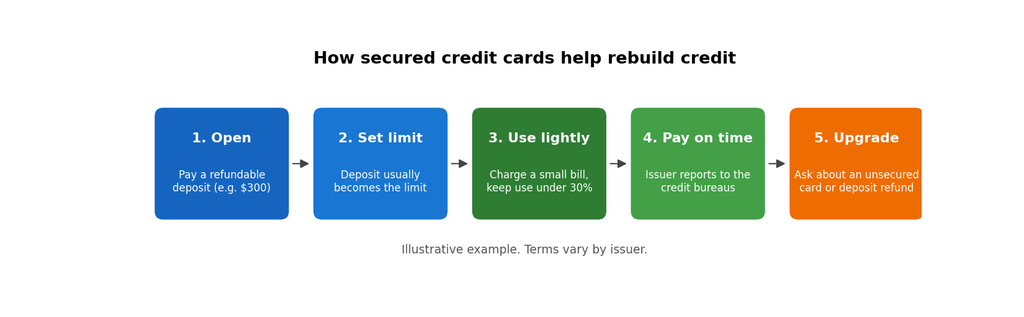
Here is the typical process:
- You apply and pay a refundable security deposit.
- The issuer usually sets your credit limit equal to the deposit.
- You make small purchases and pay the bill on time.
- The issuer reports your activity to the credit bureaus.
- After a period of good behavior, you may qualify for an upgrade or a deposit refund.
The deposit often ranges from about $200 to $500, although some issuers ask for more. Some cards allow a higher limit if you deposit more. Terms differ, so read the cardholder agreement before you apply.
Where your deposit goes
The issuer holds your deposit. It does not pay your bill automatically. You still owe the full statement balance each month. If you stop paying, however, the issuer can use the deposit to cover what you owe.
You typically get the deposit back when you close the account in good standing. You may also get it back if you move to an unsecured card. Confirm the refund rules in writing.
Why Secured Credit Cards Can Help Rebuild Credit
Credit scores reward two habits above all: paying on time and keeping balances low. Secured credit cards let you practice both. In addition, they add a fresh, active account to a thin or damaged credit file.
Payment history
Payment history is the largest factor in most scoring models. Every on-time payment adds a small amount of positive data. Over several months, those entries can start to outweigh older problems. Negative items remain on your report for years, but their impact usually fades with time.
Credit utilization
Utilization, or the share of your limit that you use, also matters. A $300 limit means a $30 balance equals 10% utilization. Keeping that number low shows lenders you can handle credit. Our guide to credit utilization explains how to manage it, including when to pay before your statement closes.
A bridge to better credit
Finally, a secured card can lead to better products. After a year or so of good history, you may qualify for an unsecured card. For the broader plan, read How to Rebuild Credit After Paying Off Debt.
What Secured Credit Cards Cost
Secured credit cards are not free. Costs vary a lot from one issuer to another, so compare them carefully.
- Security deposit: It is refundable, but your money is tied up.
- Annual fee: Some cards charge none, and others charge a modest yearly fee.
- Interest rate (APR): Rates are often high. Pay in full each month to avoid interest.
- Other fees: Watch for application, monthly maintenance, or late fees.
Example: comparing two cards
The following case is illustrative only. Real terms differ.
| Feature | Card A | Card B |
|---|---|---|
| Security deposit | $200 | $500 |
| Credit limit | $200 | $500 |
| Annual fee | $0 | $39 |
| Monthly spending | $20 | $50 |
| Utilization | 10% | 10% |
| Fee cost over two years | $0 | $78 |
Both cards show 10% utilization, so the score benefit could look similar. Card B costs $78 over two years, though, and it ties up $300 more of your cash. Unless Card B offers something Card A lacks, such as a clear path to an upgrade, Card A is the better value.
Pros and Cons of Secured Credit Cards
Pros
- Approval is often easier, even with past credit problems
- Activity can build or rebuild payment history
- The deposit limits your risk of overspending
- Many issuers offer a path to an unsecured card
- Your deposit is refundable if you manage the account well
Cons
- You need cash for the deposit
- Some cards carry annual or monthly fees
- Interest rates are often high
- Not every issuer reports to all three bureaus
- Late payments can still damage your credit
On balance, the benefits outweigh the costs for people who pay on time and avoid fees. On the other hand, someone who struggles with spending may find even a small limit risky.
How to Choose a Secured Credit Card
Choosing wisely matters more than choosing quickly. Use this checklist:
- Check bureau reporting. The card should report to Equifax, Experian, and TransUnion.
- Compare fees. Look for no annual fee, or a low one.
- Review the deposit terms. Learn how and when you get it back.
- Look for an upgrade path. Some issuers review accounts after several months. Others never do.
- Confirm the deposit is protected. Ask whether it sits in an insured bank account. The FDIC explains deposit insurance basics on its website.
- Avoid prepaid and debit cards. They don’t build credit in the same way, since they don’t create a lending relationship.
Be cautious about offers that charge large upfront fees. Federal regulators warn that some products labeled as “credit builders” cost more than they deliver. The Consumer Financial Protection Bureau offers free consumer guidance if you want to double-check a company.
Who Should Consider a Secured Card
Secured cards make the most sense in certain situations:
- You have no credit history or a very thin file
- You recently paid off debt and your score is still low
- You’ve had collections or late payments in the past
- You’ve been denied for unsecured cards
- You can afford the deposit without hurting your budget
If this sounds like you, read How Debt Payoff Affects Your Credit Score. It explains why your score may not jump right away.
Who May Want to Skip One
A secured card isn’t right for everyone. Think twice if:
- You qualify for an unsecured card with no annual fee
- You can’t spare the deposit without missing essential bills
- You tend to overspend on credit cards
- The card’s fees would eat most of the benefit
In some cases, other tools work better. A credit-builder loan builds installment history. An authorized user account can add positive history from someone else. Each option has trade-offs, so compare them against your goals. You can also review Pay for Delete: Does It Work? before you pay for any credit repair service.
How to Use a Secured Credit Card Wisely
How you use the card matters as much as which card you pick. Follow these habits.
Start small and stay low
Put one small, recurring bill on the card, such as a phone plan. Keep your balance under 30% of the limit, and aim for under 10% if you can. Never max out the card.
Pay on time, every time
Set up autopay for at least the minimum payment. Better yet, pay the full statement balance. That way, you avoid interest and keep your record clean. Add a reminder in your calendar too.
Keep the account open
Closing a card too soon shortens your history and lowers your available credit. Instead, keep it open if it has no annual fee. Ask about an upgrade after six to twelve months of on-time use. Policies vary, and no issuer has to approve you.
Monitor your credit
Check your reports regularly to confirm the card appears and reports correctly. You can get free reports at AnnualCreditReport.com. If you see an error, file a dispute.
Common Mistakes to Avoid
Even a good card can backfire when used poorly. Avoid these mistakes:
- Missing a payment. One late payment can undo months of progress.
- Carrying a balance. You don’t need to pay interest to build credit.
- Using too much of the limit. High utilization can lower your score.
- Paying fees without comparing. A cheaper option may exist.
- Opening several cards at once. Multiple applications create inquiries.
- Ignoring the upgrade review. Ask your issuer how and when it reviews accounts.
Frequently Asked Questions
Are secured credit cards worth it?
For many people, yes. They can help you build positive payment history when other cards aren’t available. They work best with low fees and on-time payments and are less useful if you already qualify for a no-fee unsecured card.
Do secured credit cards build credit?
They can. Issuers report your payments and balances to the credit bureaus, much like they do with regular cards. Confirm that your card reports to all three bureaus before you apply.
How long does it take to rebuild credit with a secured card?
There is no fixed timeline. Many people notice gradual progress after several months of on-time payments and low balances. Larger improvements often take a year or more, depending on your starting point.
How much is the deposit for a secured credit card?
Deposits often range from about $200 to $500, although some are higher or lower. The deposit usually becomes your credit limit. Check the issuer’s terms for exact amounts.
Do you get your security deposit back?
Usually, yes. You typically get it back when you close the account in good standing or upgrade to an unsecured card. Ask the issuer to explain the refund process in writing.
Can a secured credit card hurt your score?
Yes, if you misuse it. Late payments, high balances, and a new hard inquiry can lower your score. Used carefully, though, it tends to help over time.
When can you upgrade a secured card to an unsecured card?
Some issuers review accounts after six to twelve months of on-time use. Others don’t offer upgrades. Ask the issuer about its policy before you apply.
The Bottom Line
Secured credit cards can be a practical tool for rebuilding credit. The best ones have low fees, report to all three bureaus, and offer a path to an unsecured card. Use yours lightly, pay on time, and keep the account open.
If you don’t need one, skip it. Your credit can also improve through steady payments and low balances on the accounts you already have. For your next step, review your credit reports and set up autopay.
This article is for educational purposes only and is not financial, legal, or tax advice. Card terms, fees, and credit scoring practices vary by issuer and change over time. Consult a qualified professional about your specific situation.